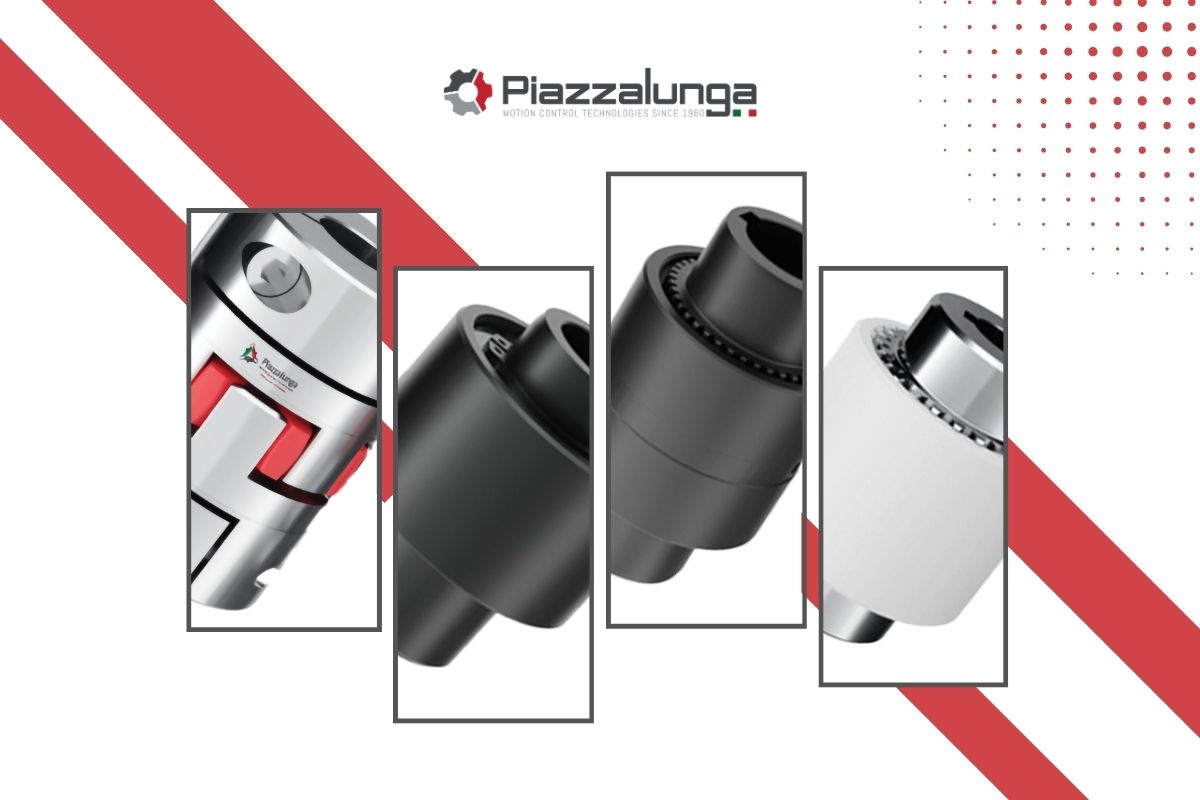
It’s better to manage a controlled disengagement than an unexpected shutdown.
Anyone working in the industrial mechanics field knows this well: when a machine stops due to a sudden overload, the consequences can be costly — not only in terms of maintenance, but also downtime and loss of productivity.
To prevent all this, there’s a simple and essential component: the torque limiter.
A device designed to protect transmission components, ensuring that the machine stops in a controlled and safe manner before any damage occurs.
In this article, we’ll take a look at how it works, when it’s needed, and why Piazzalunga’s LSR/GT Series represents one of the most effective solutions for combining precision, rigidity and mechanical safety.
What Is a Torque Limiter and What Is It For?
A torque limiter is designed to operate when the transmitted torque surpasses a predefined threshold.
In other words, it acts as a “safety valve” for the transmission system: it disengages before the overload can damage components such as motors, gearboxes, shafts or gears.
Mechanical torque limiters are used in a wide range of industries — from machine tools to automation systems, from packaging equipment to industrial robots.
Their function is always the same: to interrupt motion quickly and in a controlled manner, thus protecting the entire system.
Our range includes the following types:
- Friction type, based on adjustable friction discs.
- Ball or roller type, employing precision elements housed in calibrated grooves.
Between the two, the ball or roller design offers an ideal balance of precision, response speed and structural simplicity.
How a Ball or Roller Torque Limiter Works
In a ball or roller torque limiter, motion is transmitted through a series of spherical or cylindrical elements housed in dedicated grooves.
When the transmitted torque remains within the specified limits, everything operates smoothly and continuously.
However, when an overload occurs, the balls or rollers move along their grooves and the system instantly disengages, interrupting power transmission.
The result is a precise, repeatable and bidirectional disengagement, capable of reacting within fractions of a second.
The Principle of Controlled Disengagement
The disengagement of a torque limiter is mechanically calibrated: the intervention force is defined by preloaded springs, which exert constant pressure on the balls or rollers.
When the torque exceeds the preset value, the spring yields and the system activates, disengaging the moving parts.
In this way, the excess energy is safely dissipated, preventing sudden mechanical failures.
Adjusting the Intervention Torque
One of the major advantages of ball or roller torque limiters is the ability to adjust the intervention torque according to operational needs.
By varying the spring preload, the disengagement threshold can be increased or reduced, allowing the device to adapt to different applications or load conditions.
This ensures precise, repeatable control minimizing the risk of unplanned downtime.
Why Choose a Mechanical Torque Limiter Over Electronic Solutions
Today, electronic protection systems are also available: torque is monitored via sensors, which trigger alarm signals to the machine control system when limits are exceeded.
However, in many industrial applications, mechanical solutions remain the most reliable. Here’s why:
- Immediate response: disengagement occurs in real time, with no detection delay.
- Simplicity and durability: fewer sensitive components mean longer service life.
In demanding conditions or in plants where absolute reliability is required, a high-quality mechanical torque limiter is the safest and most predictable solution.
In some applications, mechanical and electronic protection systems may be used in combination (redundancy).
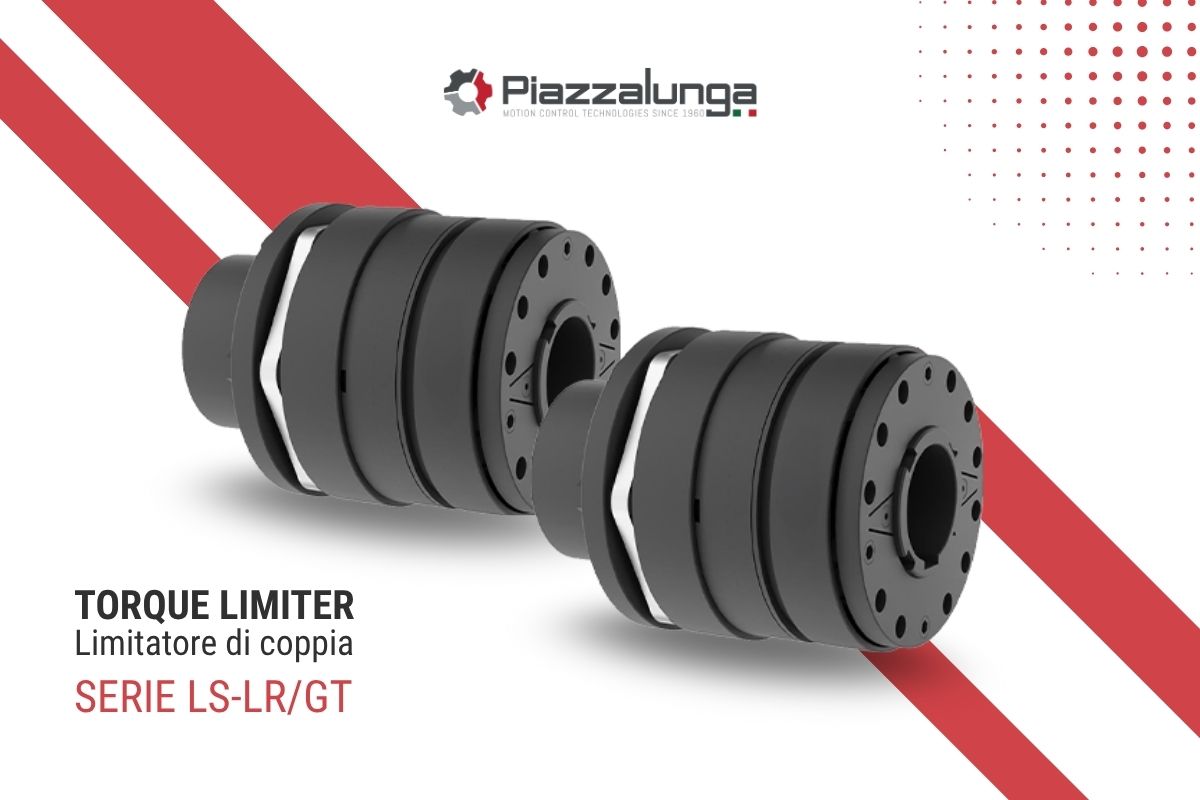
The Piazzalunga Solution – LSR/GT Series
The Role of the Disc pack Coupling in Transmission
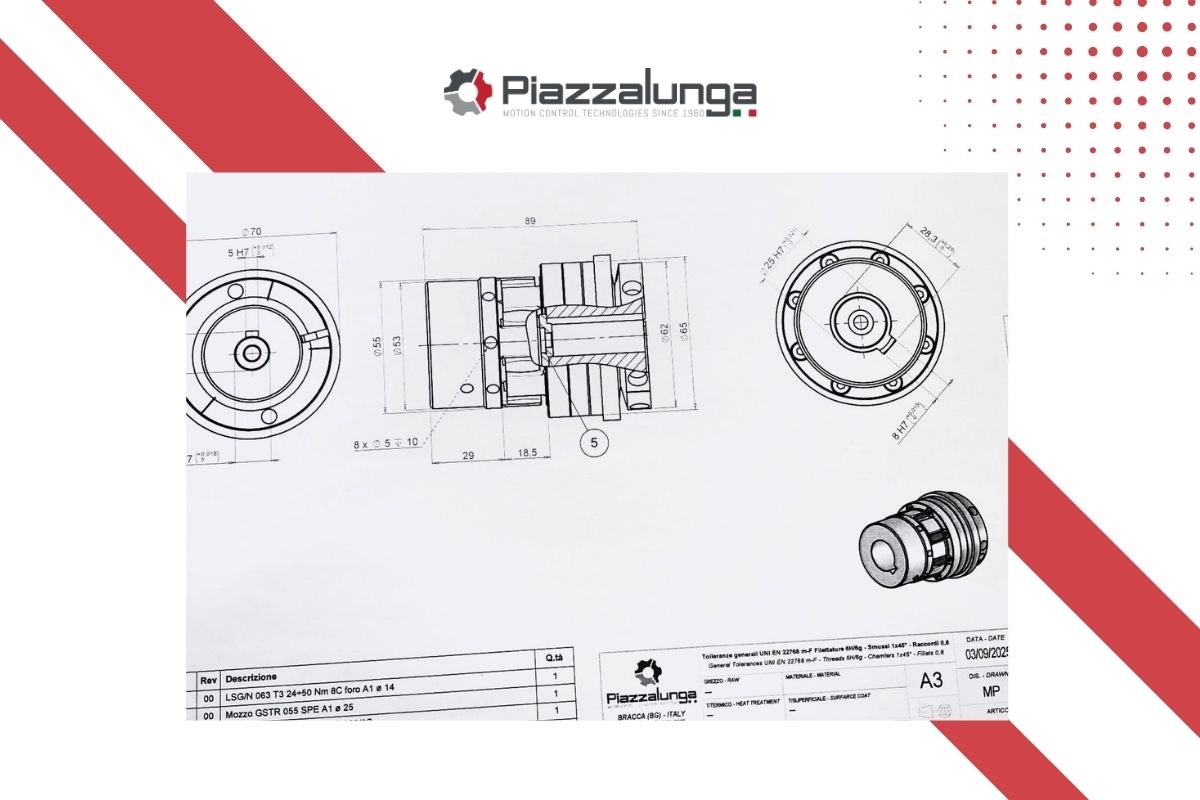
The LSR/GT Series combines ball or roller torque limiter technology with an integrated disc pack coupling, offering complete protection and high-precision power transmission.
Designed to deliver consistent performance even in challenging environments, it is the ideal choice for those seeking reliability and full control over their production line.
Key Technical Features
- Intervention torque: 60 to 5,200 Nm
- Maximum bore: 90 mm
- Disengagement: bidirectional
- Reset: automatic, including customized settings
- Integrated disc pack coupling, providing:
- Zero backlash, essential for precision applications
- High stiffness, ensuring loss-free power transmission
- Direct mounting, without the need for additional coupling elements
- Zero backlash, essential for precision applications
The result is a compact, precise, and easy-to-install transmission with fewer components subject to wear or maintenance.
👉 https://piazzalunga.com/en/product/ls-lr-gt-series/
Application Benefits and Ideal Sectors
Key Advantages
- Immediate protection against overloads and mechanical shocks
- Backlash-free transmission
- Higher precision in motion
- Easy installation and adjustment
Typical Applications
The LSR/GT torque limiters are used across a wide range of industries:
- Machine tools and high-precision positioning systems
- Automation lines and industrial robotics
- Packaging and bottling plants
- Material handling systems
- Mechanical testing and inspection applications
Conclusion: Safety and Continuity in Mechanical Transmission
A torque limiter is, in essence, a safeguard for your machine.
It allows intervention before damage occurs, preserving the integrity of the transmission and reducing maintenance costs and downtime.
The LSR/GT Series represents the perfect combination of robustness, precision, and safety: a mechanical system that unites the best of both worlds — controlled disengagement and torsional rigidity.
👉 In mechanics, as in prevention, the difference is made by acting just a moment earlier.
Contact us at commerciale@piazzalunga.com to find the torque limiter best suited for your industrial plant.