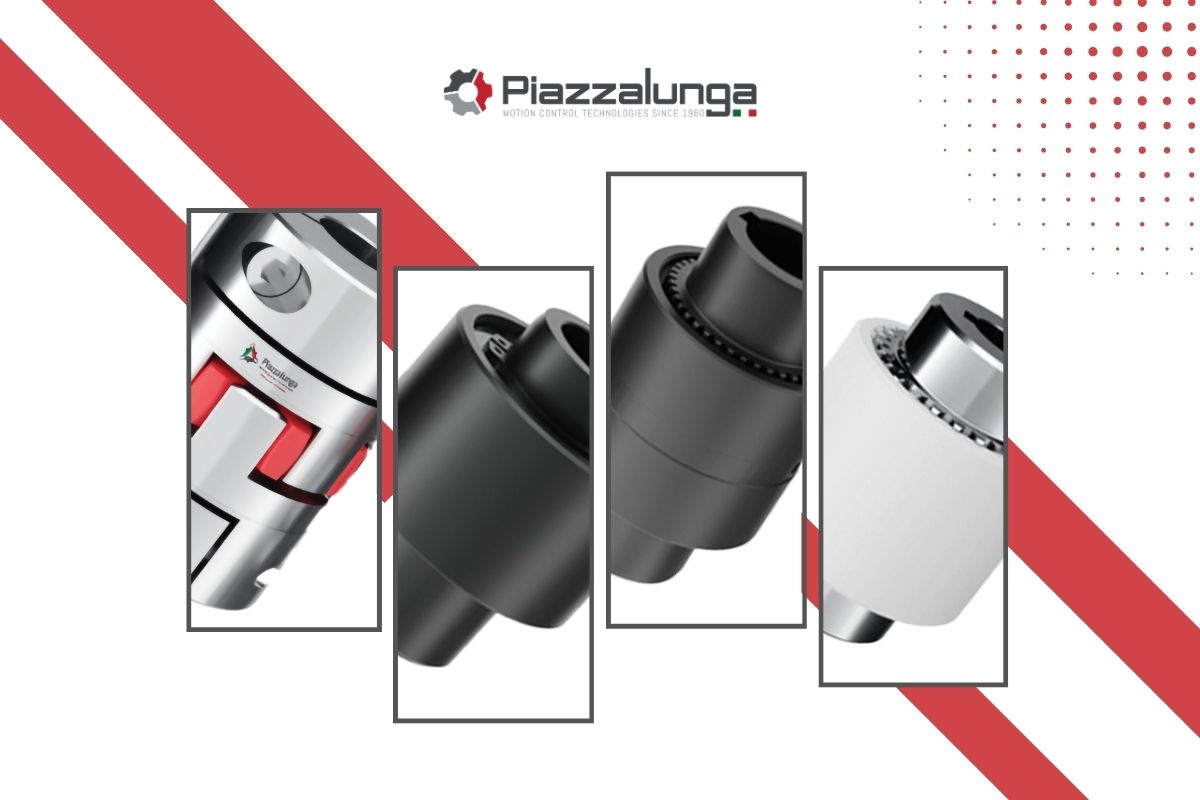
When it comes to mechanical power transmission, every application is unique.
Different motors, different environments, different requirements. That’s why, in most industrial situations, a standard coupling is not enough: it may work, but it cannot guarantee optimal machine performance or long service life.
The truth is simple: the best coupling is the one designed specifically for your application.
To do this, we need precise information.
At Piazzalunga, customization is a key strength: we don’t offer “catalog variants,” but technical solutions developed from six fundamental data that truly guide the design work of our engineering department.
Let’s take a closer look at them.
Why a Custom-Designed Coupling Really Makes the Difference
Every mechanical transmission operates under unique conditions: variable torque, speed, vibrations, environmental factors, limited installation space and specific standards.
A standard coupling, if not perfectly compatible, can cause:
- premature component wear;
- vibrations and noise;
- uncompensated misalignment;
- energy losses;
- machine downtime due to failure;
- more frequent maintenance.
A custom-designed coupling, on the other hand, is optimized to transmit torque correctly, compensate for misalignment and operate safely.
In other words: higher performance, longer service life and greater production continuity.
The 6 Essential Data Points for Designing a Custom Coupling
1. Torque
Torque is the first parameter we analyze.
It is the value that determines the coupling’s size, materials, geometry and its ability to withstand the stresses transmitted from the motor to the load.
An undersized coupling may break or deform; an oversized one increases costs, weight, and inertia.
Knowing both the nominal and the peak torque it is possible to define the right coupling—not just a “safe” one.
2. Misalignments
Assembly tolerances, temperature changes and machine movements inevitably lead to misalignment, which can be:
- angular
- radial
- axial
Each type affects coupling selection in a different way.
Unaccounted misalignment can cause vibrations, wear, or premature failure.
For this reason, we always ask for a clear definition of the allowable or actual misalignments of the system.
3. Space
Installation space is often more limited than expected: compact machines, constrained layouts, closely spaced shafts or the presence of other mechanical components can all create critical issues.
The coupling’s dimensions—length, diameter and hub configuration—must comply with the available space without compromising performance.
At this stage, options such as the following are evaluated:
- short couplings
- line shaft couplings
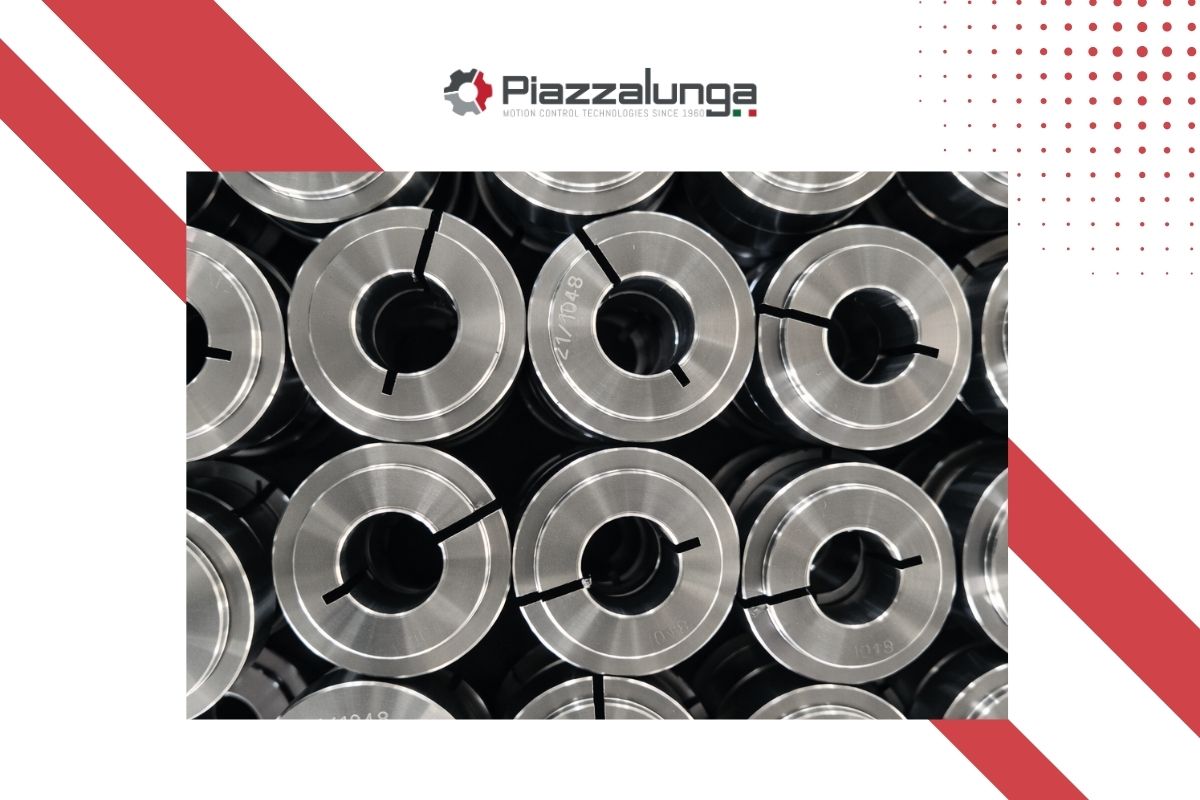
- special hubs
- hubs with split clamping locking systems.
4. Environment
A coupling operating in a food packaging plant does not face the same conditions as one in a metal rolling mill or an outdoor system.
The environmental factors we analyze include:
- temperature (high, low, or variable)
- humidity
- dust
- presence of organic or chemical residues
- corrosive agents
- cleaning or sanitization cycles
The environment affects material selection, surface treatments, tolerances, and the choice of elastic or metallic elements.
5. Required Interfaces (ISO, UNI, IEC)
A coupling can be “perfect”… but unusable if it does not properly interface with motors, gearboxes, or shafts.
Standard interfaces—ISO, UNI, IEC—define:
- bore diameters
- keyways
- tolerances
- flanges
- fastening systems
Knowing these details allows the design of a coupling fully compatible with the customer’s machine, avoiding installation issues or on-site adaptations.
6. Standards and Regulations
Some industries require very strict standards:
- Food industry: suitable materials and easily cleanable surfaces;
- Pharmaceutical industry: hygiene and precision requirements;
- National or international technical regulations.
In these cases, coupling design must comply with regulatory requirements, selecting specific materials, tighter tolerances or specialized shapes.
How these data guide the work of the Technical Department
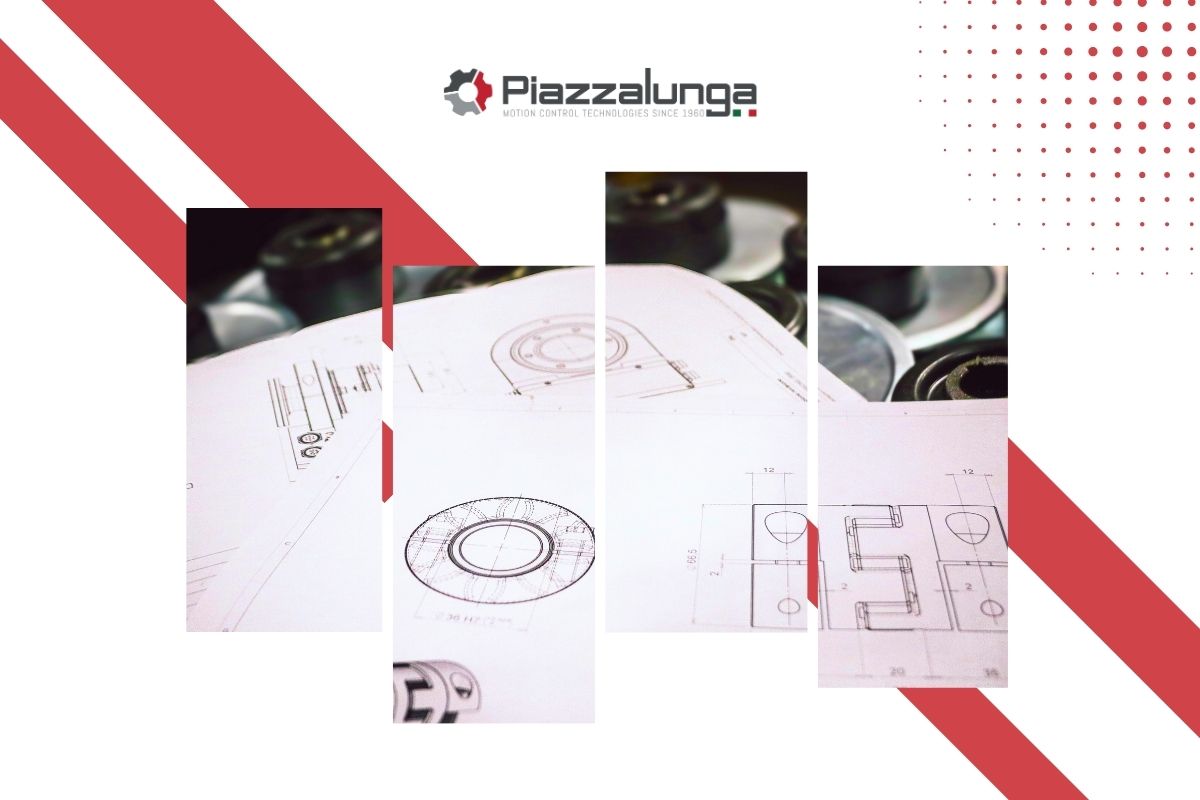
The design of a customized coupling always begins with a listening phase: understanding what the customer truly needs.
Based on the six data points, our Technical Department:
- analyzes the functional requirements;
- defines the most suitable type of coupling (elastic, rigid etc.);
- selects materials, treatments and configurations;
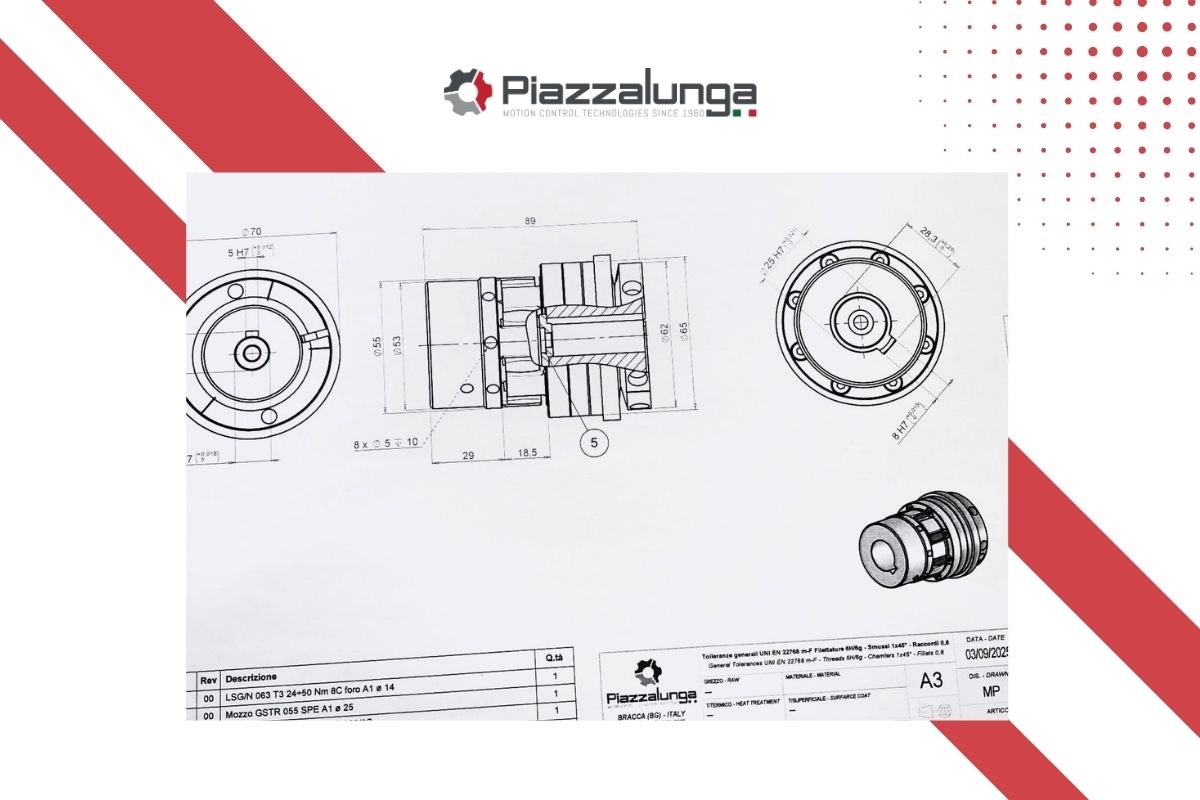
- designs the hubs and interfaces;
- proposes a concrete feasible solution.
It is a true co-design process, in which the customer brings knowledge of the machine and Piazzalunga contributes its technical expertise.
The result?
A coupling designed not for a category of machines, but for yours.
The Benefits of a Custom-Designed Coupling
A customized coupling offers tangible benefits, both operational and economic:
- Longer service life thanks to optimized materials and geometries.
- Reduced vibrations and smoother power transmission.
- Lower wear on bearings, shafts, and gearboxes.
- Higher efficiency as the transmission is calibrated to the actual load.
- Fewer machine stoppages thanks to predictable behavior and a higher safety margin.
- Simple and precise assembly because the interfaces are designed specifically for your equipment.
In short: less maintenance, more productivity, more reliability.
Conclusions: The Value of Design Guided by the Right Questions
Customizing a coupling doesn’t mean “modifying a product”; it means building a solution around your system.
The six key data points — torque, misalignment, space, environment, interfaces, standards — are at the heart of effective design.
Collecting them accurately ensures that the coupling will perform reliably over time, safely and with consistent performance.
In mechanical engineering, quality is never accidental: it comes from correct information and well-informed decisions.